Urgent floor damage
Make the area safe first. Then document the floor.
If a coating is peeling, a chemical has spilled, or a damaged area creates a trip or equipment hazard, isolate the area and follow your property’s safety and spill-response procedures before arranging coating work.
Immediate checklist
What should you do in the first hour?
- Stop traffic, mark the affected area, and remove ignition or exposure risks according to the product or facility safety data.
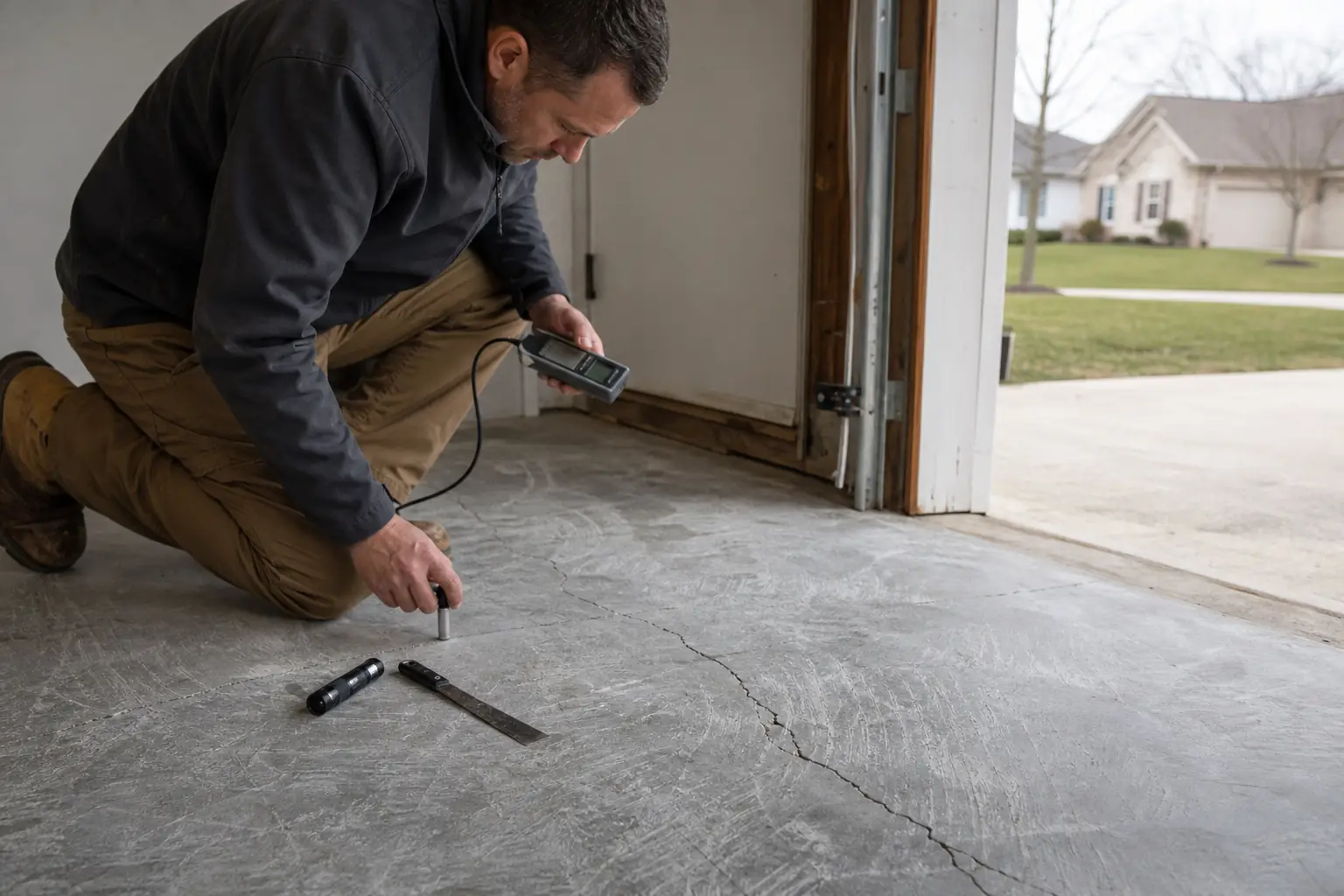
- Photograph the damage from a distance and close up. Note when it appeared, what contacted the floor, and whether the substrate is damp.
- Do not scrape, solvent-clean, or patch a commercial spill without the appropriate safety procedure and product guidance.
- For a trip hazard, keep people and vehicles away until the area is assessed and made safe.
- Ask a qualified coating provider whether the issue needs cleaning, localized repair, full removal, moisture remediation, or a new system.
For fire, gas, medical, or hazardous-material emergencies, call the appropriate emergency service. A coating provider is not a substitute for emergency response.