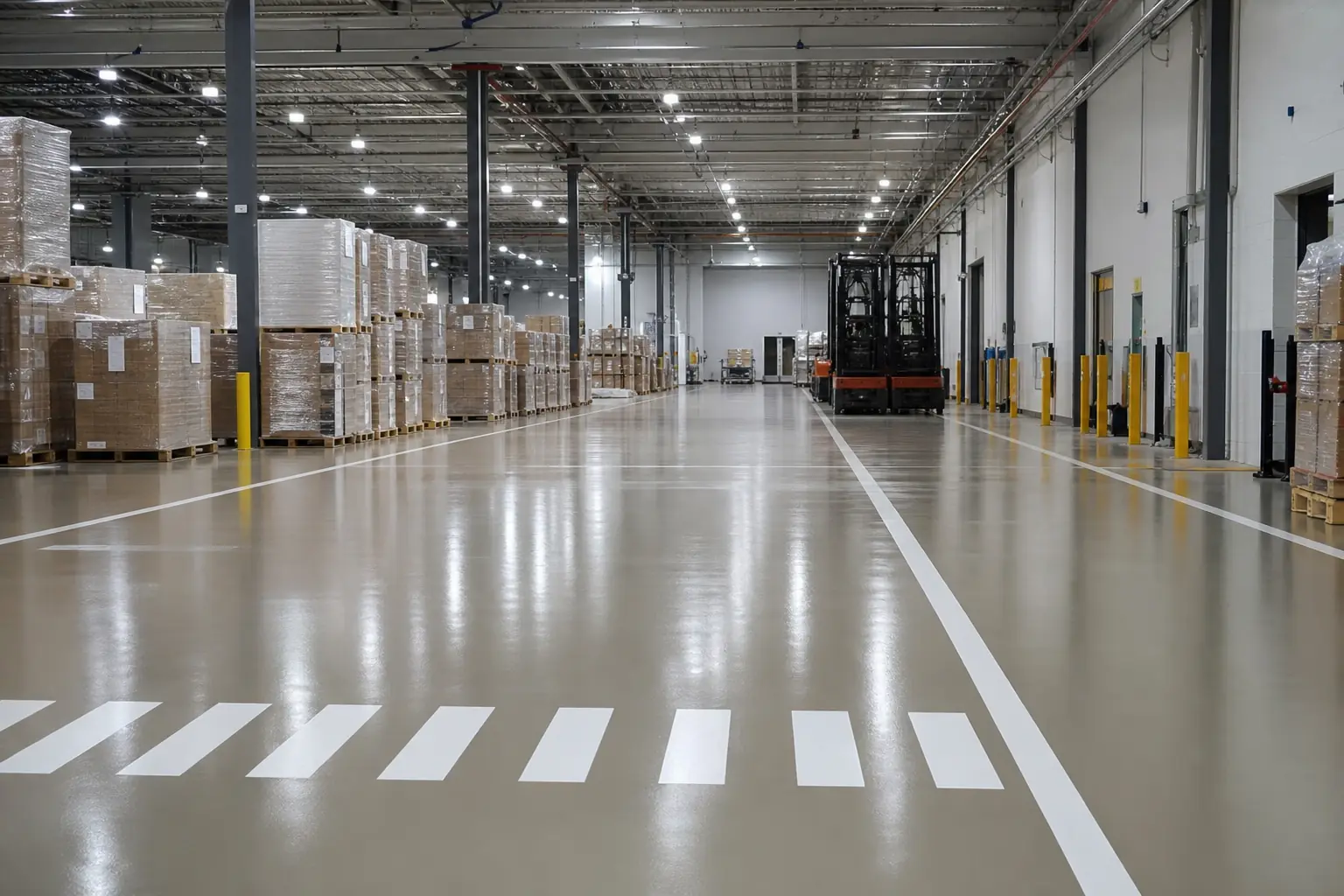
What Static-Dissipative Actually Means
Standard flooring is an electrical insulator — it allows static charge to build up on people and equipment moving across it. Static-dissipative (ESD) flooring is engineered with a controlled conductivity range that lets that charge drain away gradually and safely, rather than building up and discharging suddenly. The difference matters enormously in specific settings and is completely irrelevant in most others.
Who Actually Needs It
- Medical imaging suites and rooms with sensitive electronics, where equipment vendors often specify a conductivity range directly.
- Electronics assembly and testing facilities, where a static discharge can silently damage sensitive components without any visible sign.
- Server rooms and data centers, for the same reason.
- Facilities handling flammable solvents or fine powders, where a static spark is a genuine ignition risk, not just an equipment concern.
Who Doesn't Need It
The overwhelming majority of commercial facilities — warehouses, retail stores, restaurants, standard offices, auto dealerships — have no functional need for static-dissipative flooring, and paying for it there is pure cost with no benefit. If a vendor pitches ESD flooring for a standard retail buildout, that's worth a second opinion.
The ANSI/ESD S20.20 Standard
When ESD flooring is genuinely required, it's typically specified against the ANSI/ESD S20.20 standard, which defines acceptable resistance ranges for static-controlled environments. Equipment manufacturers in electronics and medical imaging often reference this standard directly in their facility requirements, which is the clearest signal you actually need to spec for it.
How It's Installed
ESD epoxy systems use conductive additives — often carbon or metallic particulate — blended into the resin, combined with grounding straps or copper grounding grids tied into the building's electrical ground. It's a more involved install than standard epoxy and should be handled by a contractor who can coordinate the electrical grounding work, not just pour a "conductive-labeled" product over standard prep.
Frequently Asked Questions
Ready to Get Started?
Free on-site estimate for commercial flooring projects throughout Palm Beach Gardens, Jupiter, Wellington, Lake Worth Beach, Boynton Beach & greater West Palm Beach. Written scope after review. Warranty terms supplied in writing on every installation.
Get Your Free EstimateRelated Articles