Polyurea vs Polyaspartic vs Epoxy: Compared
All three show up in a proper coating system — the real question isn't which is “best,” it's which layer each one is built for.
They're Not Actually Competitors
On a properly installed floor, epoxy and polyaspartic aren't rival products — they're different layers of the same system. Epoxy is typically the base or build coat; polyaspartic (or polyurea) is the topcoat. Most of the “which is better” confusion in the market comes from budget installers who only apply one product and market it as the whole solution.
Epoxy: the Base Coat Workhorse
Ask the provider to state the preparation method and required surface profile for the selected system. Include old coating removal, repairs, and the treatment of joints in the written scope.
Polyaspartic: the Fast-Cure Topcoat
Ask the provider for separate application and return-to-use milestones for walking, storage, vehicles, and cleaning. Timing must follow the installed products and actual job conditions.
Polyurea: the Broader Chemistry Family
Polyaspartic is technically a type of aliphatic polyurea — this is the single biggest point of confusion in the flooring market. “Pure” polyurea, used more often in commercial and industrial settings, cures even faster, sometimes usable within hours, but that speed makes it trickier to apply by hand. That's exactly why polyaspartic, a slower-curing polyurea variant, became the standard for residential and light commercial floor topcoats.
What Florida Garage Coating Pros Actually Installs
Our standard system layers a 100% solids epoxy base with a full flake or metallic broadcast, capped by a polyaspartic or polyurea topcoat. That combination gets the adhesion strength of epoxy and the UV stability and fast cure of polyaspartic in one floor — which is exactly why every installation carries a warranty terms supplied in writing against delamination and peeling.
Quick Comparison
- Epoxy: strongest adhesion and build thickness, slower cure, not UV-stable alone
- Polyaspartic: fast cure (~24 hrs), UV-stable, more flexible through temperature swings
- Polyurea (industrial-grade): fastest cure of all, harder to hand-apply, mostly used commercially
- Our system: epoxy base + polyaspartic/polyurea topcoat, combining the strengths of both
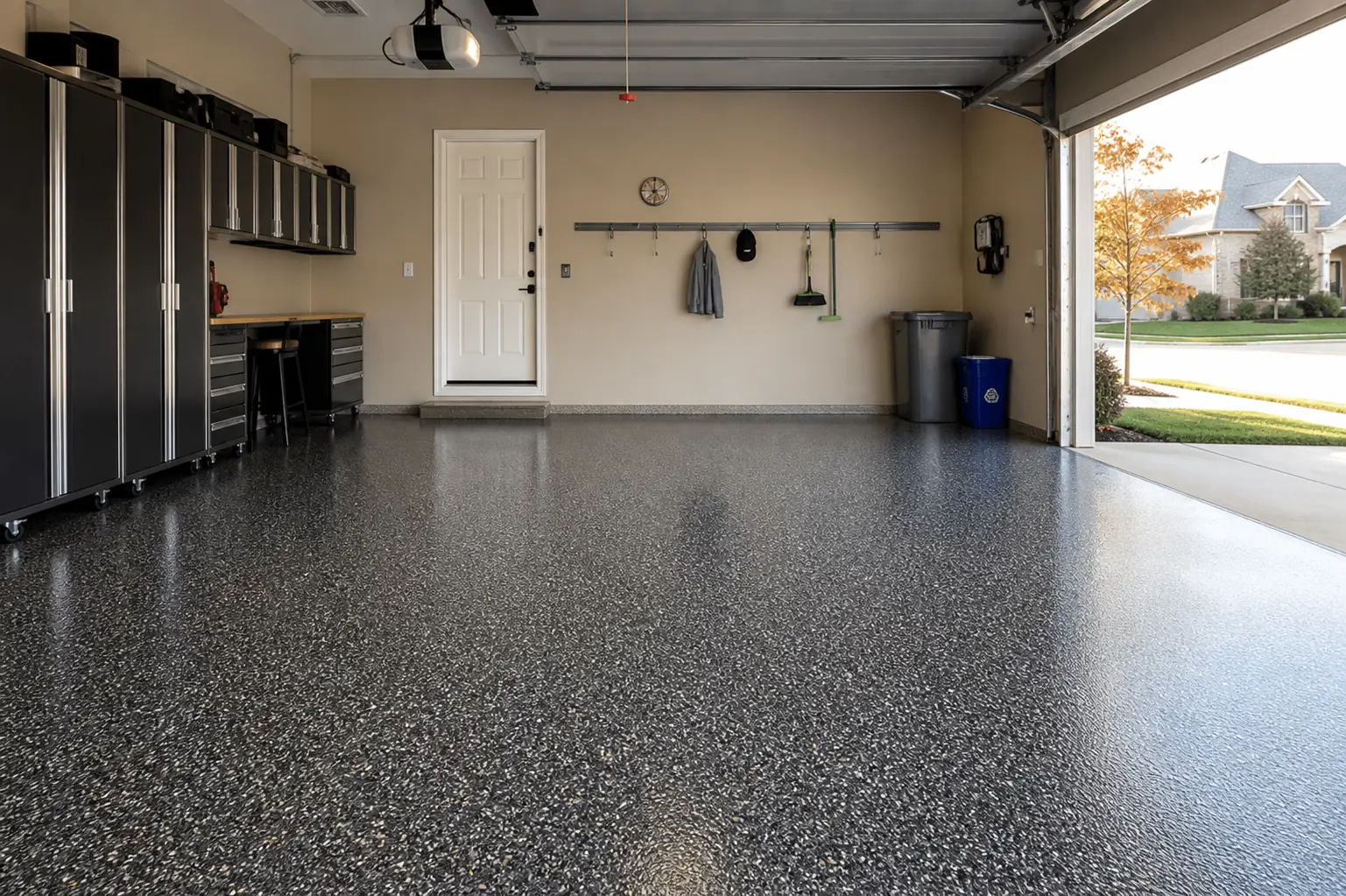
Adhesion Below, Durability On Top
A floor that's marketed as “just polyaspartic” has usually skipped the epoxy build coat entirely, trading long-term adhesion strength for a faster sales pitch.
Our systems always pair the two: a full-thickness epoxy base for adhesion, sealed with a polyaspartic or polyurea topcoat for UV stability and fast cure.
Get Free EstimateQuestions Answered
Ready to Start Your Garage Transformation?
Free on-site estimate. One quote for everything. Lifetime floor warranty included.
Get Free Estimate