Point-Loading Is the Real Problem
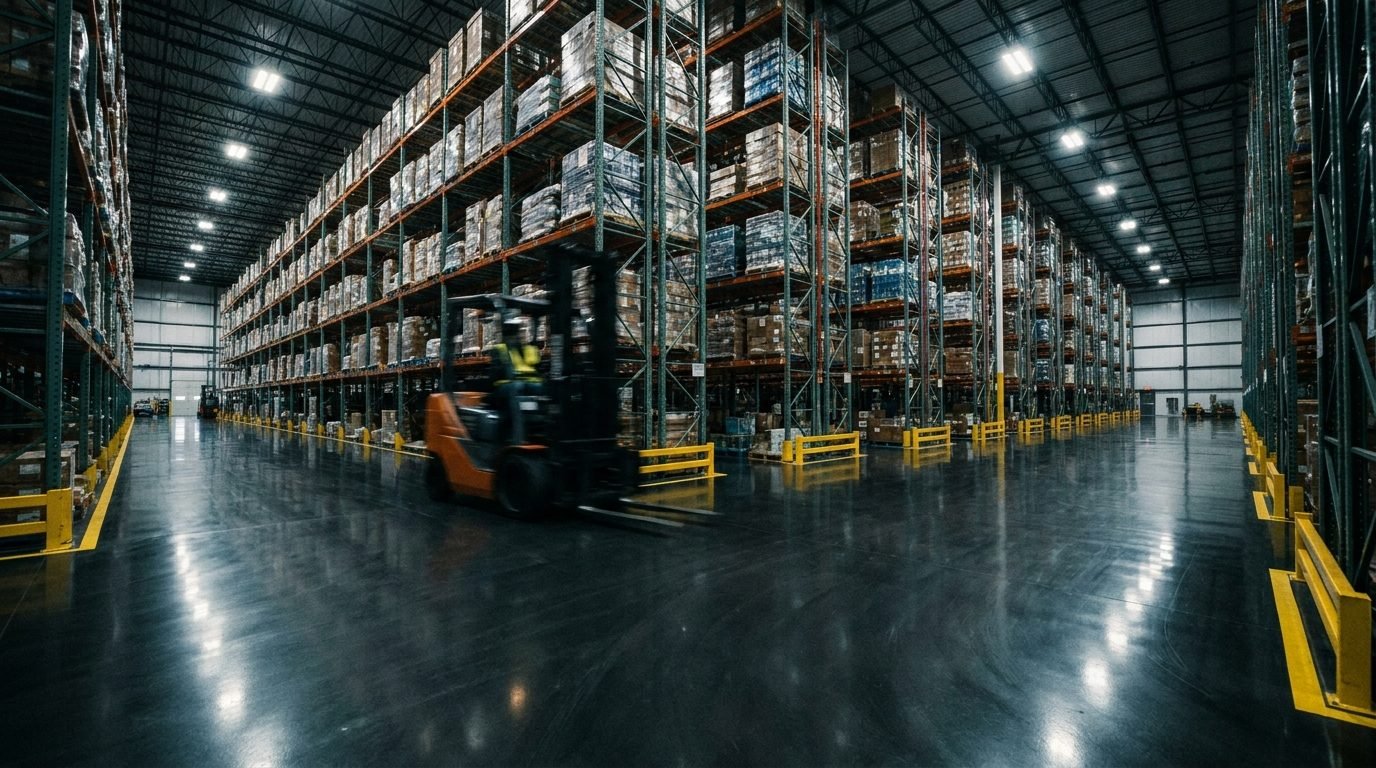
A person walking distributes their weight across a shoe's full contact area. A loaded forklift concentrates thousands of pounds onto a few square inches of wheel contact — and does it thousands of times a day on the same aisle lines. That's a fundamentally different stress profile than foot traffic, and it's why warehouse floors need a specifically engineered system, not just a thicker version of a retail coating.
Where the Damage Actually Shows Up
- Aisle turn zones, where wheels pivot and scrub rather than roll cleanly, concentrate abrasive wear far beyond straight travel paths.
- Rack-leg bases, where impact from misjudged turns and dock-plate transitions chips or spalls unprotected concrete edges.
- Dock approach areas, where steel dock plates and trailer transitions combine impact and point-loading in one high-stress zone.
- Battery charging stations, where acid drips from electric lift batteries chemically attack unprotected coatings over time.
What a Properly Specced System Addresses
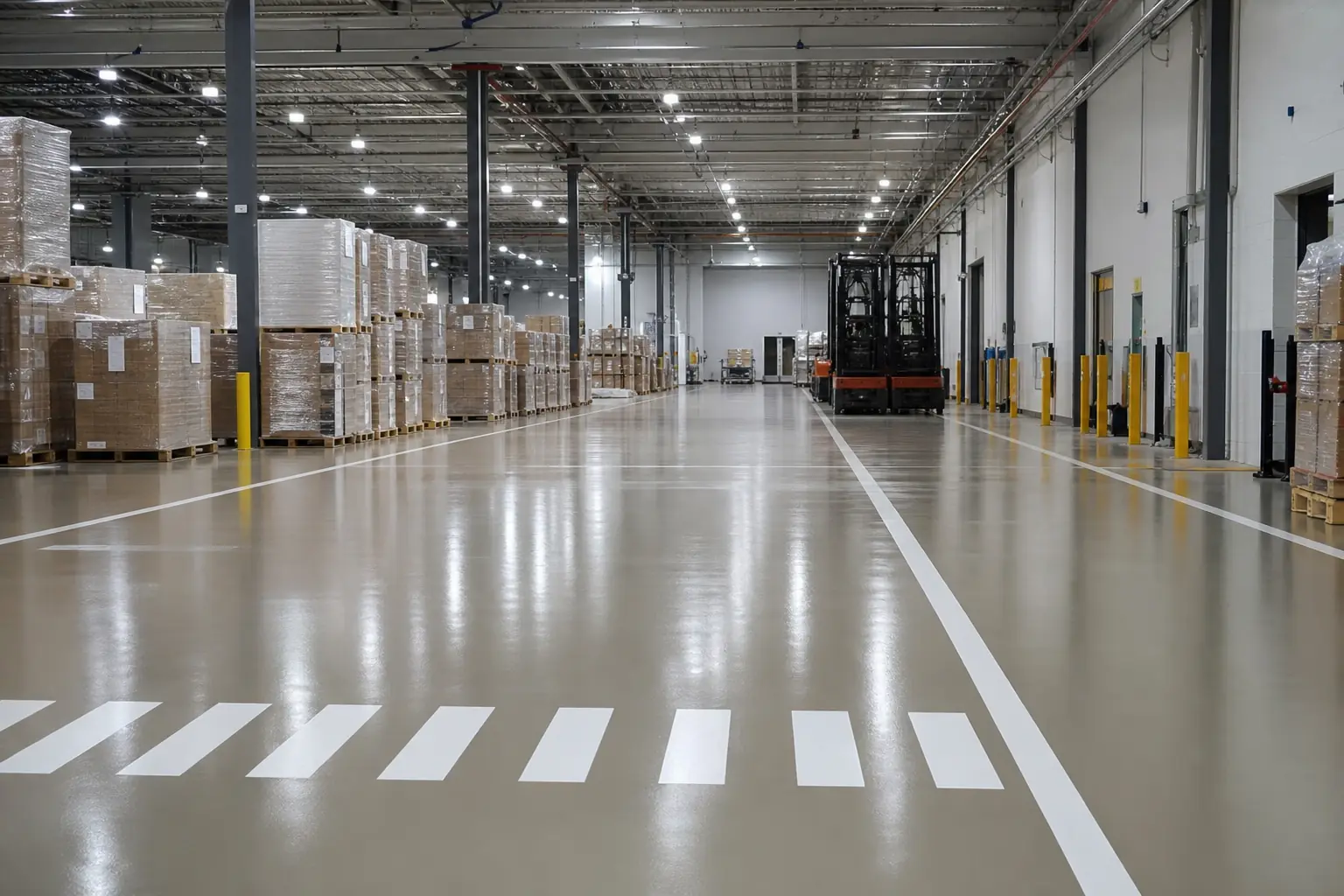
Film thickness matters more in warehouses than almost any other commercial setting — a thin, single-coat system simply doesn't have the material depth to resist repeated point-loading without cracking. We build warehouse systems with a high-build 100% solids epoxy base, often broadcast with aluminum oxide or silica for added wear resistance in the heaviest aisles, topped with a polyaspartic or aliphatic topcoat for UV stability near dock doors and loading areas exposed to daylight.
Cushion vs. Pneumatic vs. Steel Wheels
Not all forklifts stress a floor equally. Cushion-tire (solid rubber) forklifts are relatively gentle. Pneumatic and especially steel or polyurethane wheels concentrate far more point-load stress and wear coatings faster. Telling your contractor your actual fleet mix — not just "we have forklifts" — should change the system spec, and if it doesn't, that's worth asking about.
Frequently Asked Questions
Ready to Get Started?
Free on-site estimate for commercial flooring projects throughout Palm Beach Gardens, Jupiter, Wellington, Lake Worth Beach, Boynton Beach & greater West Palm Beach. Written scope after review. Warranty terms supplied in writing on every installation.
Get Your Free EstimateRelated Articles