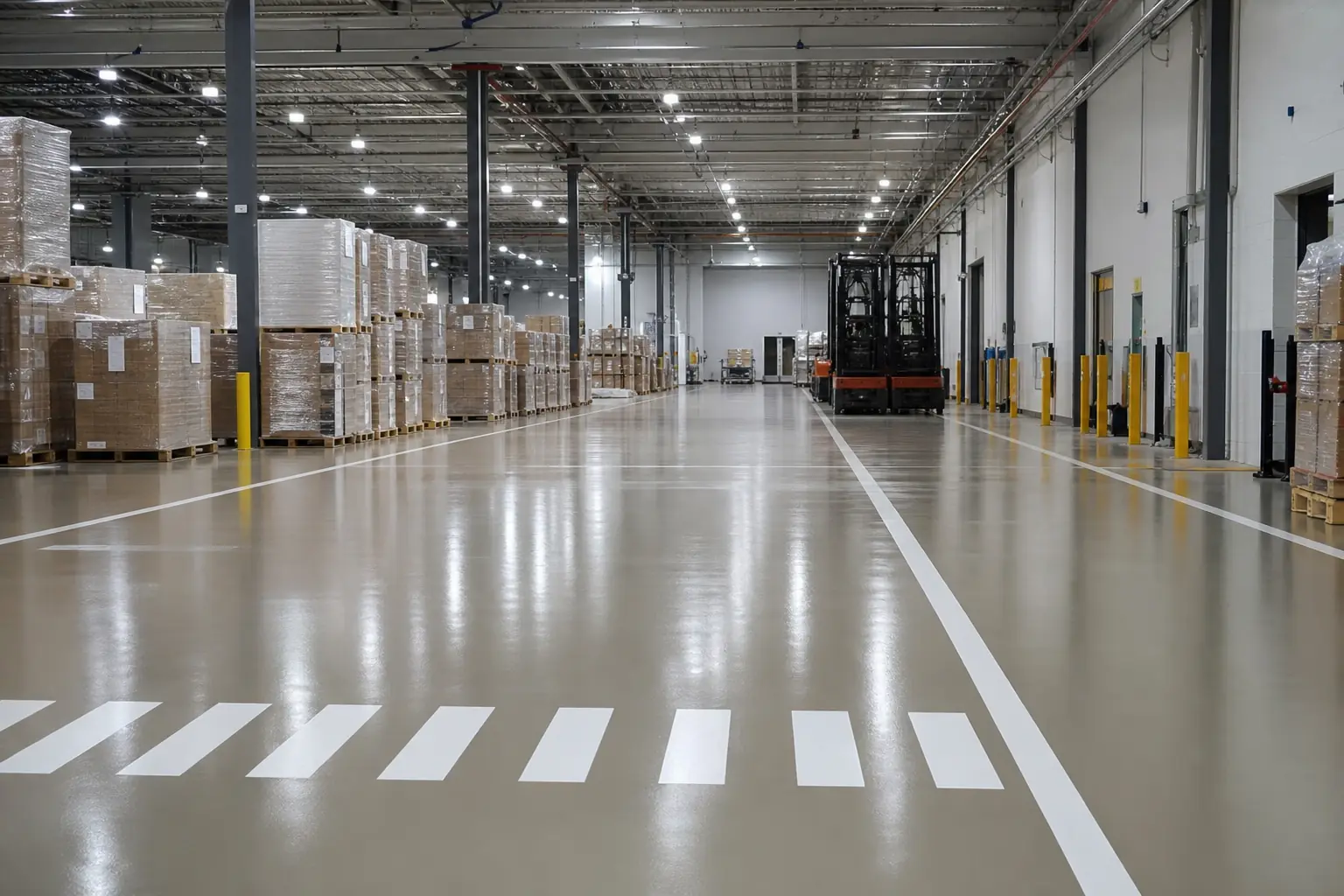
Why Floor Marking Isn't Just About Looking Organized
Warehouse floor striping does real safety work — it separates pedestrian and forklift traffic, marks staging and hazard zones, and gives OSHA-referenced walking-working-surface guidance a physical form on your actual floor. A clearly marked warehouse also measurably reduces near-miss incidents between foot and equipment traffic, which is the real reason it matters beyond compliance.
What OSHA Guidance Actually Covers
OSHA's walking-working-surfaces standard (29 CFR 1910 Subpart D) addresses aisle and passageway clearance broadly, and general industry guidance calls for marked, unobstructed aisles wide enough for the equipment and traffic they serve. It doesn't hand you a paint-color rulebook — the specifics of striping color, width, and layout are typically drawn from ANSI/OSHA-referenced conventions and your own facility's hazard assessment, not a single universal chart.
Common Marking Conventions
- Yellow — general aisle boundaries and equipment traffic paths, the most common warehouse floor color for a reason.
- Red — fire equipment locations, emergency equipment access, and areas that must stay clear at all times.
- White — pedestrian walkways, kept visually distinct from equipment traffic lanes.
- Combination striping (e.g., red/white diagonal) — hazard zones, low-clearance areas, or spots requiring extra caution.
Durability Matters More Than People Expect
Ask the provider for separate application and return-to-use milestones for walking, storage, vehicles, and cleaning. Timing must follow the installed products and actual job conditions.
Getting It Right the First Time
A good warehouse striping layout accounts for your specific rack layout, forklift turning radius, and pedestrian traffic patterns — not a generic template. We map this out with your operations team during the estimate so the finished layout actually matches how your warehouse runs, not just how warehouses run in general.
Frequently Asked Questions
Ready to Get Started?
Free on-site estimate for commercial flooring projects throughout Palm Beach Gardens, Jupiter, Wellington, Lake Worth Beach, Boynton Beach & greater West Palm Beach. Written scope after review. Warranty terms supplied in writing on every installation.
Get Your Free EstimateRelated Articles