The Right Way to Clean & Maintain Your Epoxy Floor
A properly installed 100% solids system needs almost no upkeep — but the wrong cleaning products can dull the finish faster than daily use ever will.
Why Epoxy Floors Need Less Maintenance Than People Expect
A properly installed 100% solids epoxy or polyaspartic system is a sealed, non-porous surface. Nothing soaks in, so there's no grout to scrub and no sealant to reapply every year the way you would with bare or painted concrete. For most homeowners, "maintenance" is really just regular sweeping and the occasional mop — not a project.
Daily and Weekly Care
A dust mop or a quick pass with a leaf blower clears grit before it becomes a problem. Grit tracked in on tires acts like sandpaper over time and is the single biggest cause of a floor losing its gloss — more than any chemical exposure. Once a week, a damp mop with a pH-neutral cleaner and warm water handles the rest.
- Daily/as-needed: dust mop or blower pass to clear grit before it grinds in
- Weekly: damp mop with a pH-neutral cleaner
- Monthly: quick check of entry points and corners for tracked-in debris buildup
What Not to Use on an Epoxy or Polyaspartic Floor
Vinegar, ammonia-based glass cleaners, and citrus degreasers are all mildly acidic or solvent-heavy, and repeated use over months can dull a topcoat's sheen even though it won't happen after one cleaning. Steel wool and abrasive scrub pads do the same thing mechanically. None of these will damage the floor's structure or cause peeling — they just aren't necessary and work against the finish over time. A pH-neutral floor cleaner and warm water outperform all of them.
Handling Salt, Rain Melt & Year-round Tracking
use conditions mean sand, water, and household chemicals and calcium chloride get tracked in on tires and boots for months at a stretch. On bare or painted concrete, that causes white staining (efflorescence) and gradual surface breakdown. On a properly sealed epoxy or polyaspartic system, salt sits on top of the coating rather than soaking in, so it mops or rinses right off. We recommend mopping a bit more often through December–March and keeping a boot tray near the entry door during heavy rain stretches.
Removing Oil, Chemical Spills & Tire Marks
100% solids epoxy resists automotive fluids — oil, antifreeze, brake fluid — far better than the thinner, water-based coatings in most DIY kits. A spill wiped up within a reasonable time typically won't leave a mark. For anything that's already dried, a mild degreaser and a soft brush followed by a rinse usually clears it. Hot tire pickup (marks left after parking a hot car on pavement-hot summer days) is more common on lower-grade epoxy; a properly cured polyaspartic topcoat resists it.
When to Reseal or Recoat
With a genuine 100% solids system and polyurea topcoat, most homeowners never need to recoat — that's the entire premise behind our warranty terms supplied in writing against delamination and peeling. Recoating only becomes relevant after decades of heavy daily use, or if something outside normal wear damages the surface, like a chemical spill left to sit for an extended period.
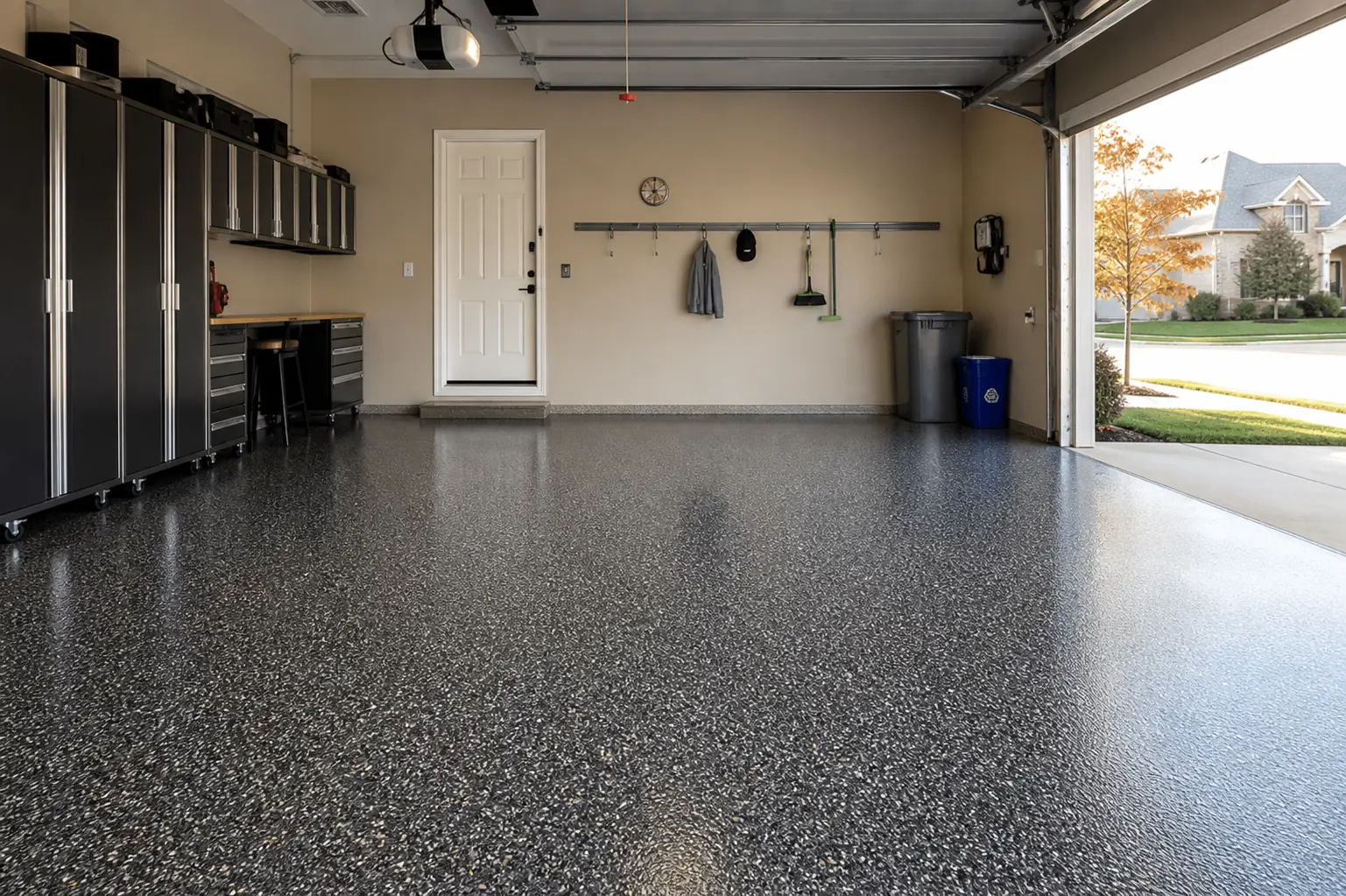
The One Habit That Protects Gloss Longer Than Anything Else
Most of the dulling we see on older coated floors traces back to grit, not chemicals — fine sand and debris tracked in on tires grinding against the surface every time a car pulls in or out.
A quick dust mop or blower pass before parking, especially during dry summer months and gritty year-round weeks, does more for long-term gloss than any specialty cleaner ever will.
Get Free EstimateQuestions Answered
Ready to Start Your Garage Transformation?
Free on-site estimate. One quote for everything. Lifetime floor warranty included.
Get Free Estimate