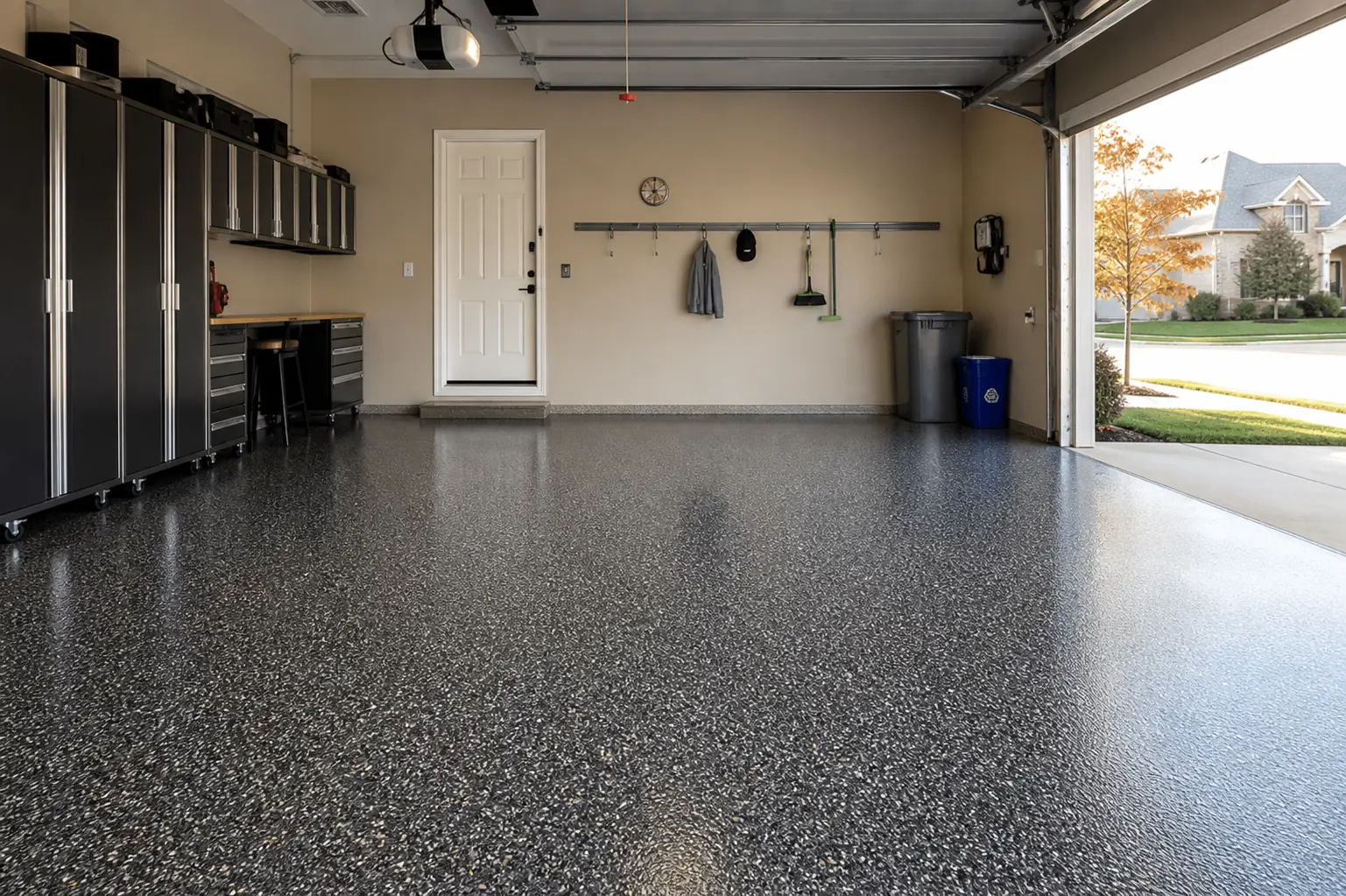
An existing garage coating is a candidate for recoating only when its condition, adhesion, and compatibility with the new system have been assessed. Peeling, loose material, moisture concerns, or an unidentified finish may change that decision. Ask the provider to compare retaining the sound coating with removal to an accepted substrate, including the cost and limitations of each route.
The old floor has lost its gloss, but most of it still looks attached. A fresh topcoat sounds less disruptive than starting over. It might be an option. First establish whether the problem is wear at the surface or a failure in the layers beneath it.
Sort the visible symptoms before asking for a recoat
| What you see | Useful information to supply | What to ask |
|---|---|---|
| Dullness or fine scratches | Age, use, and cleaning products | Is the existing finish sound enough for a compatible maintenance coat? |
| Peeling or exposed concrete | Where the failure began and whether it is spreading | Which layers need removal and why? |
| Bubbles or recurrent damp patches | When they appear and any water history | What assessment is needed before another coating? |
| A finish with no product records | Any old invoice, label, or installer information | How will compatibility be established? |
Why a fresh topcoat cannot establish a sound foundation
If the retained layer is not firmly attached, the new finish is still relying on it. A new color may cover the evidence without answering why it appeared. Ask the provider which layer failed and how the proposed work addresses that failure.
Rust-Oleum's EPOXYSHIELD instructions include a check of existing coating adhesion and require removal when it fails their stated criterion. That check belongs to that product's instructions. It should not be presented as a universal test or acceptance limit for every resin system.
Get the assessment method and decision from the provider installing your system. If peeling is widespread, review the guide to peeling and bubbling garage coatings before agreeing to a cosmetic refresh.
Compare the two scopes, not just the two totals
For a recoat proposal, record which areas will be retained, how they will be prepared, how exposed concrete will be handled, and how compatibility is established. Ask whether a trial application is appropriate and what its result would mean for the final decision.
For a removal proposal, record the removal method, disposal responsibility, expected substrate condition, repair allowance, and the new coating layers. Removal can uncover issues that were hidden by the old finish; agree on the change-order process before work begins.
Use the garage floor coating quote checklist to compare those assumptions. Neither route should be sold with a guaranteed outcome based only on photographs.
Bring the old product records if you have them
An invoice saying “epoxy” may not identify the actual topcoat. Look for the manufacturer, product names, application date, and any previous repairs. Photograph leftover containers without opening them. Tell the provider about polishes, sealers, or other treatments applied since installation.
If records are missing, say so. The provider can explain how that uncertainty changes preparation, testing, or warranty terms. Do not guess the resin type from its gloss or from how quickly the original installer finished.
Plan the access window for the new system
Ask for the time needed for assessment, preparation, repairs, installation, and return to use. A “recoat in one day” description may refer only to application. It does not establish when you can park a warm vehicle, reinstall a loaded workbench, or wash the floor.
In a Palm Beach County garage, note whether rainwater reaches the entrance and whether the door can stay open during work. The provider should set the application and cure conditions from the chosen product instructions. The garage floor curing guide helps separate those milestones.
Define the warranty boundary
If part of the old coating stays, ask whether the provider warrants that retained layer or only the new work. What happens if the original coating later detaches? A clear exclusion may make removal more attractive, or may be acceptable for a limited refresh. Make that decision with the documents in front of you.
Request an assessment of your existing garage coating. Include photographs of intact and damaged areas, any product records, your city, and your required access date. Ask for a written explanation of the recommended route.